
SHOCKWAVE THERAPY · HUNTINGTON, NY
Shockwave Therapy for Plantar Fasciitis in Huntington, NY
Stubborn heel pain that hasn’t responded to rest, stretching, or orthotics? Focused acoustic-wave therapy restarts healing in the plantar fascia — FDA-cleared, non-surgical, and the single most-studied use of shockwave. Most patients need just three to six short sessions, with no needles and no downtime.
Same day appointments may be available.
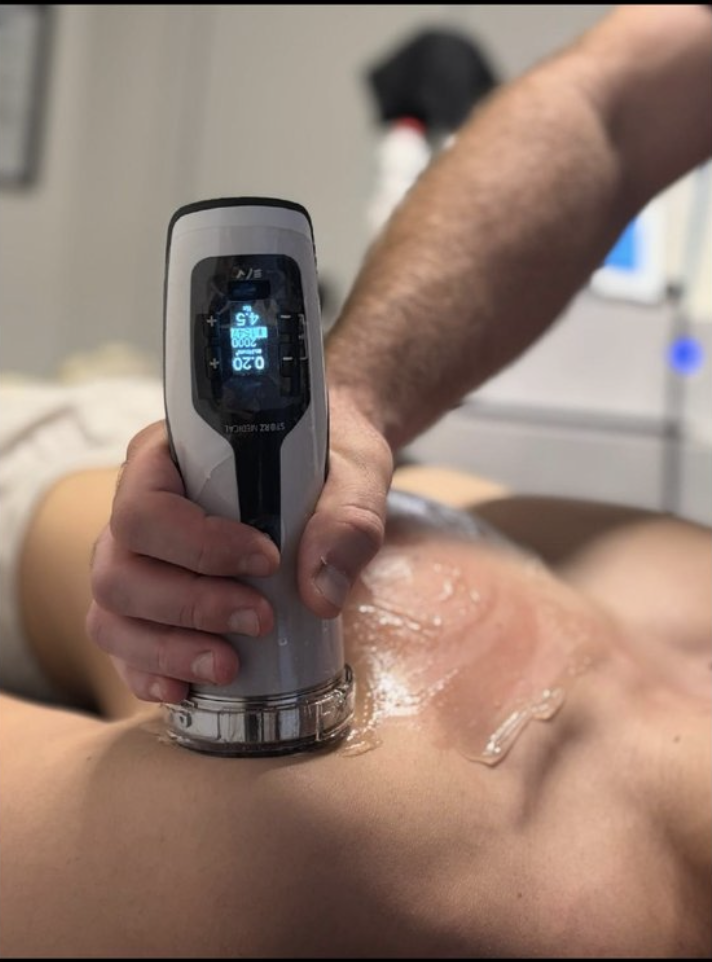
Shockwave therapy for plantar fasciitis is a non-invasive, FDA-cleared treatment that uses focused acoustic waves to restart healing in the plantar fascia — the band of tissue along the bottom of your foot. At West Hills Chiropractic Pain Center in Huntington, NY, it’s one of the most effective options we offer for heel pain that hasn’t responded to rest, stretching, or orthotics, and it’s the single most-studied use of shockwave therapy. Most patients need three to six short sessions, with no needles, no surgery, and no downtime.
Why plantar fasciitis is so hard to shake
Plantar fasciitis is the most common cause of heel pain — more than two million Americans are treated for it every year. You know the signature: that sharp, stabbing pain in the heel with your first steps in the morning, or when you stand up after sitting. It eases as you get moving, then creeps back by the end of a long day on your feet.
Here’s the frustrating part, and the reason it lingers. Despite the “-itis” in the name, long-standing plantar fasciitis usually isn’t inflammation anymore. It’s degeneration — the tissue at the heel has developed tiny tears and simply stopped healing properly. That’s why anti-inflammatories and rest often stall out: they calm an inflammatory process that’s no longer the main problem. The tissue needs a reason to start repairing again, and that’s exactly what shockwave therapy provides.
How shockwave therapy treats plantar fasciitis
We deliver focused acoustic pulses directly to the painful origin of the plantar fascia at the heel. The body reads that mechanical energy as a signal to repair: blood flow to the area increases, new small blood vessels form, and the cells that rebuild healthy tissue are switched back on. In effect, shockwave converts a stalled, chronic problem back into an active healing one.
Because we use a focused Storz Medical device rather than a lighter radial unit, we can concentrate energy precisely at the depth of the fascia’s attachment — which matters for reaching the actual pain generator instead of just treating the surface. It’s the same focused technology used throughout the plantar fasciitis research.
What the research shows
Plantar fasciitis is where shockwave has its deepest evidence base — and it’s why the FDA first cleared ESWT for this exact condition back in 2000.
- A 2024 systematic review of 14 randomized trials (867 patients) found ESWT measurably reduced the thickened plantar fascia visible on ultrasound — an objective structural change, not just a pain rating (Simental-Mendía et al., Arch Orthop Trauma Surg, 2024).
- A meta-analysis focused on stubborn cases that had already failed other treatment found high-energy shockwave significantly improved the odds of a 60% or greater reduction in heel pain versus placebo (Sun et al., 2017).
In plain terms: for the chronic heel pain that hasn’t budged with the usual care, shockwave has real, repeatable results behind it.
Are you a candidate?
Shockwave is usually the right next step if you’ve had heel pain for more than six weeks and haven’t gotten lasting relief from rest, stretching, night splints, or orthotics. It’s especially worth considering if you want to avoid a cortisone injection (which can weaken the fascia over time) or are trying to stay off the surgical path. We confirm the diagnosis first — heel pain has other causes, and shockwave works best when we’re treating the fascia specifically.
What to expect
- Evaluation. We confirm it’s truly plantar fasciitis and pinpoint the exact painful spot.
- Treatment. Gel couples the applicator to your heel; the device delivers pulses for about five to ten minutes. You’ll feel a firm tapping — we keep the intensity productive but tolerable.
- Back to your day. No wrap, no downtime; you walk out and drive home. Ease off high-impact activity for a day or two.
- A short series. Most cases need three to six sessions about a week apart.
- Loading. We pair treatment with targeted calf and fascia loading so the tissue rebuilds correctly. Relief usually builds over the weeks during and after the series.
How it compares to other heel-pain treatments
| Option | Treats the cause? | Downtime | Long-term trade-off |
|---|---|---|---|
| Rest / NSAIDs | No — calms inflammation that’s often no longer the issue | Ongoing | Frequently stalls in chronic cases |
| Orthotics / night splints | Supports, doesn’t heal | None | Helpful but often incomplete alone |
| Cortisone injection | No — masks pain | A few days | Can weaken/rupture the fascia with repeat use |
| Surgery (fascia release) | Sometimes | Weeks | Invasive; reserved for last resort |
| Focused shockwave | Yes — restarts repair | None | Best evidence of the non-surgical options for chronic cases |
FAQ
Frequently asked questions
Does shockwave therapy for plantar fasciitis hurt?
You’ll feel a strong, deep tapping at the heel, and the spot may be tender because it’s already the painful area — but it’s tolerable, needs no numbing, and any soreness afterward is mild and short-lived.
How many sessions will I need?
Most people need three to six, spaced about a week apart. Newer cases sometimes settle in three; long-standing heel pain may need the full course.
How soon will my heel feel better?
Because shockwave stimulates healing rather than masking pain, relief is gradual — many notice a change within two to three weeks, with more improvement over the following weeks as the fascia remodels.
Is it better than a cortisone shot?
A shot can feel better faster, but cortisone doesn’t heal the tissue and repeated injections can weaken the fascia. Shockwave works on the underlying problem, which is why we often prefer it for chronic cases.
Do I still need my orthotics or stretches?
Usually yes — shockwave works best combined with proper loading and support. We’ll guide what to keep doing.
Is it covered by insurance?
Coverage for ESWT varies by plan; many classify it as out-of-pocket. We explain costs clearly before you start.
Related care at West Hills
- Shockwave therapy overview — how focused ESWT works and every condition we treat with it.
- Shockwave for Achilles tendinopathy — the related lower-limb tendon problem that often appears alongside heel pain.
- Physical rehabilitation — the targeted loading program we pair with shockwave so the fascia rebuilds.
- Plantar fasciitis: full condition overview — symptoms, causes, and all of our treatment options.
Reviewed by the clinical team at West Hills Chiropractic Pain Center · Huntington, NY · Last reviewed May 2026
START YOUR RECOVERY
Ready to put an end to heel pain?
Find out whether focused shockwave therapy is the right next step for your plantar fasciitis. We’ll confirm the diagnosis and build a short, targeted plan.
400 W Jericho Turnpike, Huntington, NY 11743
Mon 8am–6pm · Tue 7am–6pm · Wed 8am–7pm · Thu 7am–6pm · Fri 8am–6pm · Sat 8am–12pm