

Treat Degenerative Disc Disease Before It Leads to More Pain
Non-surgical degenerative disc disease treatment in Huntington, West Hills, and Long Island using spinal decompression, chiropractic care, and rehabilitation to slow progression and restore function.
Most patients we see have already tried physical therapy, injections, or chiropractic care without lasting results.
What Is Degenerative Disc Disease?
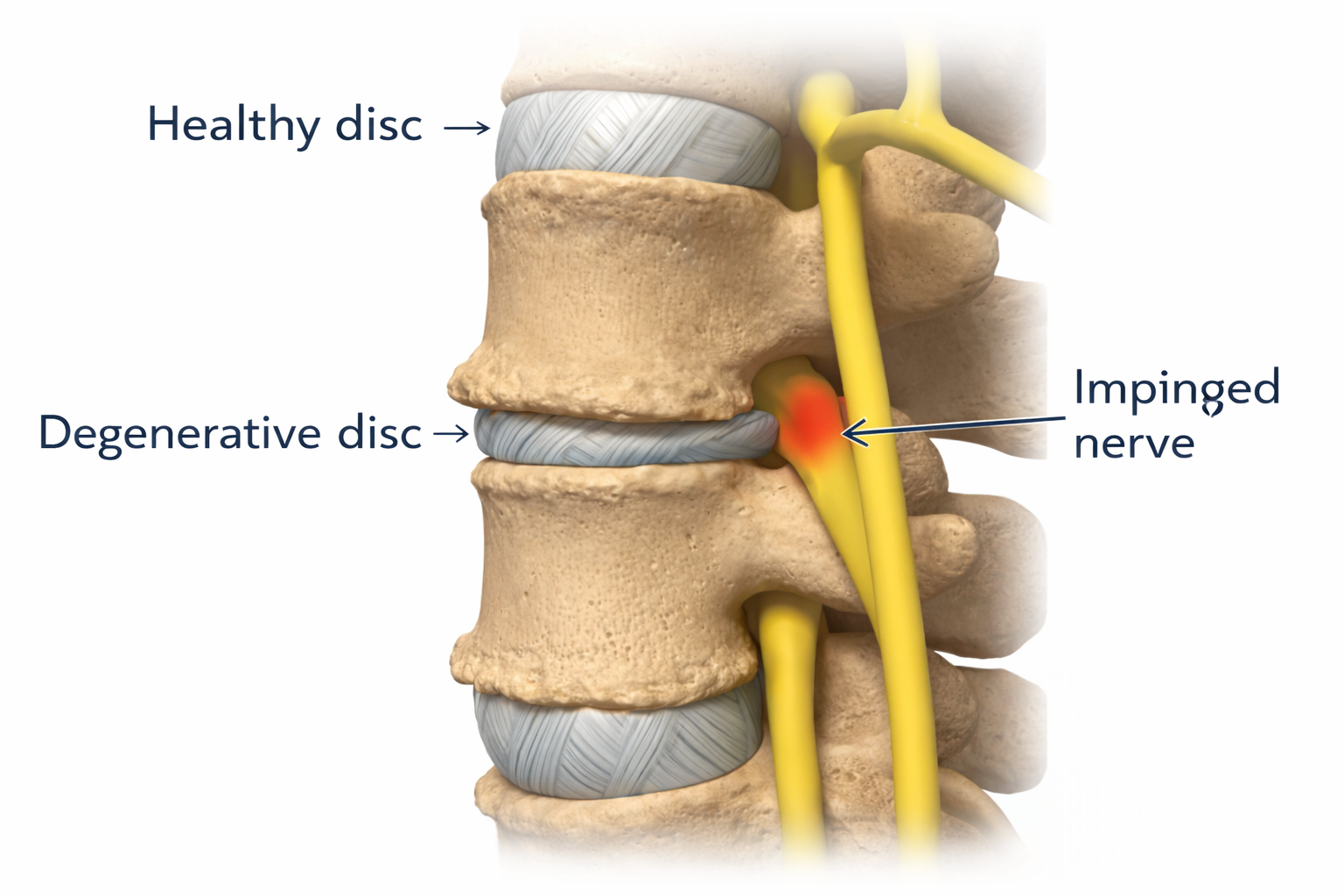
Degenerative disc disease (DDD) is not a disease at all–it’s the natural, age-related wear and dehydration of spinal discs. Over time, your intervertebral discs lose hydration and structural integrity, gradually losing height and cushioning capacity. This degenerative process typically affects the lowest discs first, particularly at L4-L5 and L5-S1 in the lower lumbar spine, where mechanical stress is greatest.
When left untreated, degenerative discs progress through predictable stages, eventually leading to herniated discs, bone spur formation, and spinal stenosis. The good news is that early intervention with advanced treatments like VAX-D spinal decompression can slow or stop progression, restoring disc hydration and function.
We address degenerative disc disease before it becomes a chronic pain condition. Our comprehensive approach combines spinal decompression, chiropractic care, and rehabilitation to target the root cause, not just symptoms.
Symptoms of Degenerative Disc Disease
- Chronic, low-grade back pain that occasionally flares up
- Pain that worsens with sitting, bending, or twisting
- Stiffness in the lower back, especially in the morning
- Pain that radiates into the hips, buttocks, or thighs
- Numbness or tingling in the legs if nerve compression occurs
- Episodes of severe pain lasting days to weeks
- Feeling of instability or “giving way” in the lower back
How Degenerative Disc Disease Progresses
Dysfunction
Initial disc damage and minor tears begin, often without noticeable symptoms.
Instability
Progressive disc breakdown accelerates, causing loss of height and structural support.
Restabilization
The body attempts to stabilize the spine through bone spur formation and ligament thickening.
Advanced
Significant disc collapse and potential nerve compression create chronic pain and dysfunction.
Risk Factors
Age
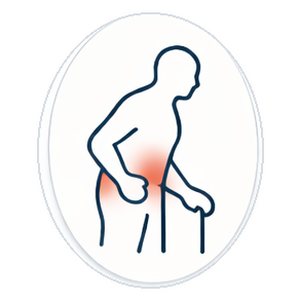
Discs naturally dehydrate and lose elasticity over time, especially after age 40.
Repetitive Strain and Heavy Lifting
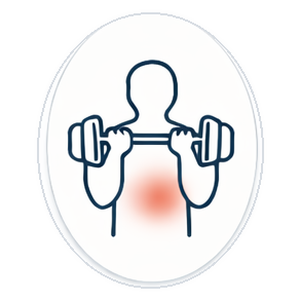
Cumulative spinal stress from work or activity accelerates disc wear.
Prior Trauma
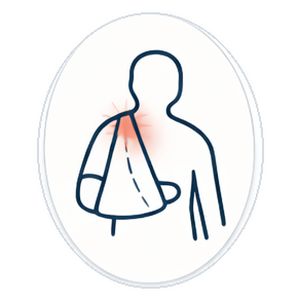
Auto accidents, falls, or sports injuries often trigger degenerative cascades.

Smoking
Smoking reduces blood flow to discs, preventing nutrient delivery and healing.
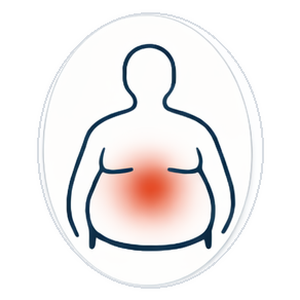
Excess Body Weight
Extra weight increases compressive forces on spinal discs, accelerating breakdown.
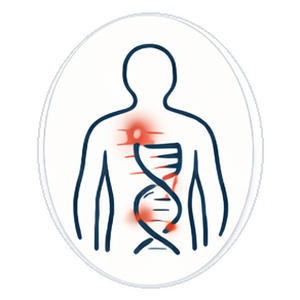
Genetics and Family History
Inherited disc vulnerability means some people are predisposed to earlier degeneration.
Don’t Wait for Degeneration to Get Worse
The longer disc degeneration progresses, the harder it becomes to restore mobility and comfort. A proper evaluation can identify the source of your symptoms and determine whether spinal decompression is the right next step.
Treatment Options
We offer multiple non-surgical approaches tailored to the stage and severity of your disc degeneration.
VAX-D Spinal Decompression
Our flagship treatment rehydrates degenerated discs through controlled negative pressure therapy. VAX-D is FDA-cleared for degenerative disc disease and works by creating a vacuum that draws nutrient-rich fluids back into damaged discs, restoring disc height and eliminating pain without surgery.
Learn about VAX-D →Chiropractic Care
Precise spinal adjustments improve alignment and reduce compensatory stress on degenerated discs. Chiropractic care enhances mobility, reduces inflammation, and works synergistically with VAX-D to optimize healing.
Explore chiropractic care →Integrative Rehabilitation
Combine exercise rehabilitation, acupuncture for inflammation management, and personalized lifestyle modifications. Our integrated team addresses degenerative disc disease from every angle, maximizing recovery potential.
View rehabilitation options →How VAX-D Supports Degenerative Discs
Why This Matters for Degenerative Discs
Why Our Approach Works for Degenerative Disc Disease
Root Cause Treatment
We address underlying disc degeneration rather than masking symptoms with temporary relief. This targeted approach delivers lasting results.
Non-Surgical Decompression
VAX-D therapy for damaged discs creates negative pressure to rehydrate and restore disc height without invasive surgery or injections.
Chiropractic Support
Improved spinal mechanics through adjustments reduce compensatory stress and enhance the effectiveness of decompression therapy.
One Integrated Treatment Plan
Rather than disconnected care, we coordinate decompression, adjustments, and rehabilitation for comprehensive disc restoration.
Frequently Asked Questions
What is the best treatment for degenerative disc disease?
VAX-D spinal decompression is the most effective non-surgical treatment, creating negative pressure to rehydrate discs and promote healing. Combined with chiropractic care and physical rehabilitation, it addresses the root cause of degeneration.
Is degenerative disc disease the same as a herniated disc?
No. Degenerative disc disease is age-related disc wear and dehydration, while a herniated disc occurs when the disc nucleus ruptures. However, untreated DDD often leads to herniation as disc integrity fails.
Does degenerative disc disease get worse over time?
Without treatment, disc degeneration typically progresses through four predictable stages, leading to increased pain, reduced mobility, and potential nerve compression. Early intervention with VAX-D and chiropractic care can slow or stabilize degeneration.
Can chiropractic care help degenerative disc disease?
Yes. Chiropractic adjustments improve spinal alignment, reduce compensatory stress on discs, and enhance mobility. Combined with VAX-D decompression, it provides comprehensive disc restoration.
Find Out If This Can Work For You
If you are dealing with disc-related pain, stiffness, or limited mobility, the next step is determining whether spinal decompression is the right approach. Most patients we see are trying to avoid injections or surgery.