
ROTATOR CUFF · HUNTINGTON, NY
Rotator Cuff Pain That Wakes You and Limits Your Reach
The shoulder pain when you reach overhead, the ache that wakes you when you roll onto that side, the weakness lifting something you used to handle easily. Rotator cuff problems range from irritation and tendinopathy to calcific deposits and tears — and the right treatment depends on which one you have. At West Hills Chiropractic Pain Center, we identify the source and treat it with conservative, evidence-based care, including shockwave therapy for tendinopathy and calcific cases, and honest guidance about when surgery is genuinely warranted.
Same day appointments may be available.
THE CONDITION
Understanding Rotator Cuff Injury
The rotator cuff is a group of four muscles and their tendons that stabilize the shoulder and let you lift and rotate your arm. Rotator cuff problems aren’t all the same: they range from tendinopathy (irritation and degeneration of the tendon), to calcific tendinopathy (calcium deposits within the tendon), to partial and full-thickness tears.
Common signs include pain reaching overhead or behind your back, pain that disturbs sleep when you lie on the shoulder, weakness lifting the arm, and a painful arc of motion partway up.
Sorting out which type of rotator cuff problem you have matters, because the treatment — and the realistic timeline — differs. Tendinopathy and calcific deposits often respond well to conservative care, while large full-thickness tears sometimes need surgical repair.
SYMPTOMS
Symptoms That Need Professional Attention
Shoulder pain that disturbs sleep or limits reaching is worth evaluating. Watch for:
- Pain reaching overhead or behind your back such as putting on a jacket or reaching a shelf.
- Night pain especially when lying on the affected shoulder.
- Weakness lifting or rotating the arm compared with the other side.
- A painful arc of motion partway up as you raise the arm.
- Aching at the outside of the upper arm rather than deep in the joint.
- Catching, clicking, or loss of smooth motion with certain movements.
Sudden weakness after a fall or injury, or an inability to lift the arm at all, should be evaluated promptly, as it may indicate a significant tear.
ROOT CAUSES
What Actually Causes Rotator Cuff Injury
Rotator cuff problems develop from a mix of overuse and time. Repetitive overhead activity at work or in sport, gradual tendon degeneration with age, poor shoulder-blade mechanics, and acute injuries such as falls can all play a role. Calcific tendinopathy involves calcium deposits forming within the tendon, which can be intensely painful during a flare.
Because mechanics and load are central, treatment that only calms the pain tends to give short-lived relief. Restoring the cuff’s strength and the shoulder blade’s control is what makes results last.
WHY IT PERSISTS
Shoulder Pain That Keeps Coming Back Has a Source Worth Finding
The rotator cuff is involved in nearly every arm movement, so a shoulder that is only quieted — not properly rehabilitated — tends to flare again with overhead use.
For tendinopathy and calcific cases, lasting relief comes from stimulating healing in the tendon and rebuilding the strength and control of the cuff and shoulder blade. When imaging points to a large tear, we’ll tell you honestly and help coordinate the right next step rather than prolonging care that won’t work.
OUR APPROACH
How We Treat Rotator Cuff Injury at West Hills
Accurate diagnosis first. We examine your shoulder, test the cuff, and review your history to distinguish tendinopathy, calcific deposits, and tears — because the right treatment depends entirely on which one you have. When advanced imaging is needed, we help arrange it.
Shockwave therapy for tendinopathy and calcific cases. Focused shockwave therapy stimulates a healing response in degenerated tendon and is particularly well-supported for calcific tendinopathy, where it can help break down calcium deposits. We offer it on-site for the cases it suits.
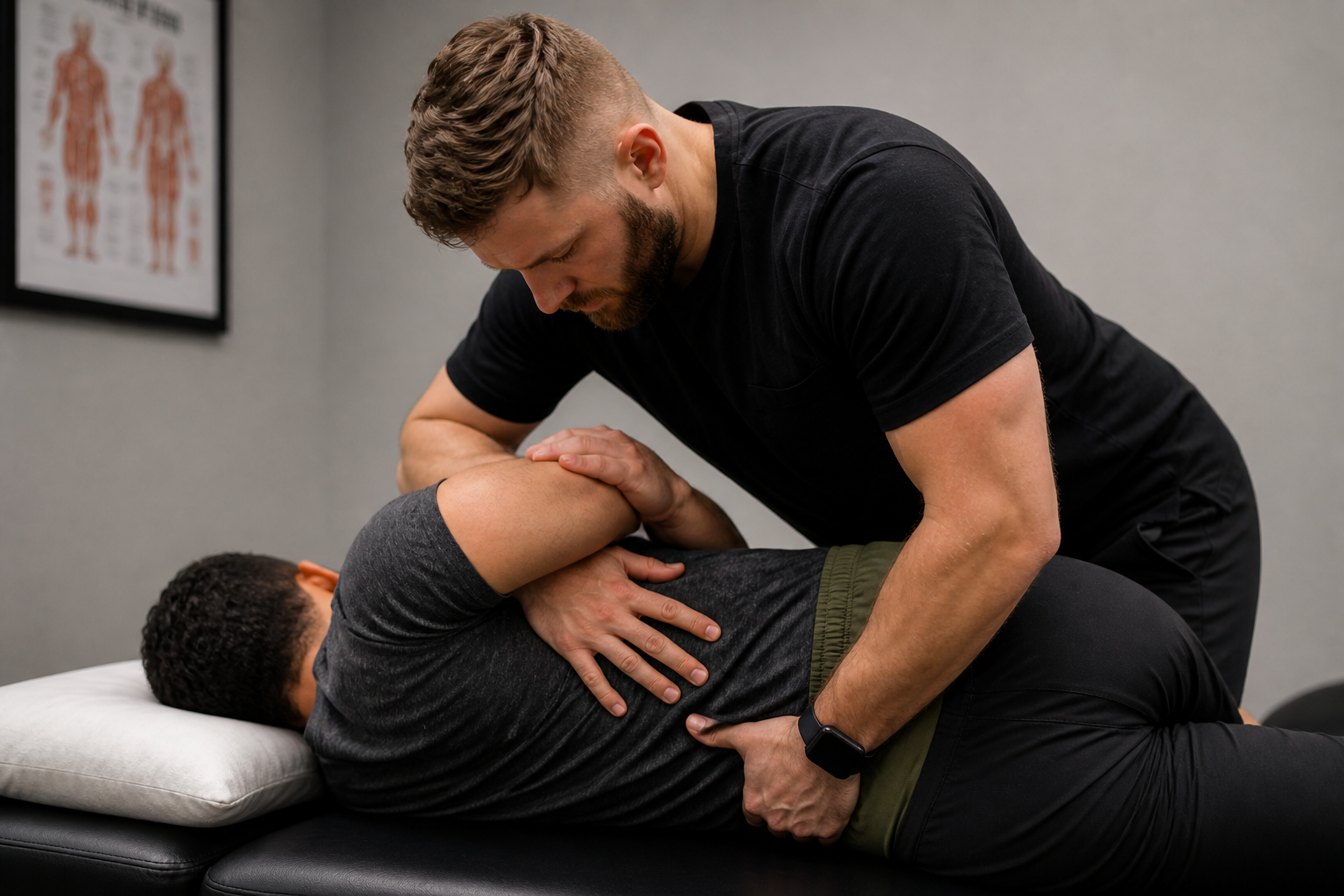
Manual therapy and adjustment. Hands-on treatment of the shoulder, shoulder blade, and upper back restores motion and reduces the impingement that irritates the cuff.
Targeted rehabilitation. Progressive strengthening of the rotator cuff and the muscles that control the shoulder blade rebuilds stability so the joint moves without pinching.
Honest guidance on surgery. Most rotator cuff problems improve without an operation. For large full-thickness tears that don’t respond to conservative care, we’ll say so and help you find the right surgical opinion.
Explore the treatments we use: shockwave therapy, physical rehabilitation, and chiropractic care.
WHY WEST HILLS
Why Patients Choose West Hills for Rotator Cuff Injury
Conservative care first. We exhaust evidence-based, non-invasive options before anyone discusses surgery.
Shockwave therapy on-site. For tendinopathy and calcific tendinopathy you don’t need a separate referral — we offer focused shockwave therapy in the same Huntington clinic, coordinated with your rehab.
Straight answers. We tell you which type of rotator cuff problem you have and what conservative care can realistically achieve — including when surgery is the better path.
Convenient Huntington location. We treat patients from Huntington, Huntington Station, Dix Hills, Melville, Commack, Northport, Cold Spring Harbor, and Greenlawn.
FAQ
Rotator Cuff Injury FAQs
Can a rotator cuff injury heal without surgery?
Many rotator cuff problems improve without surgery. Tendinopathy, impingement-related irritation, and calcific tendinopathy often respond well to conservative care such as shockwave therapy, manual therapy, and progressive strengthening. Large full-thickness tears are more likely to need surgical repair — we help you understand which situation you’re in rather than assuming.
Does shockwave therapy work for rotator cuff problems?
Shockwave therapy is used for rotator cuff tendinopathy and is especially well-supported for calcific tendinopathy, where it can help break down calcium deposits and stimulate healing. It is best suited to tendon and calcific problems rather than complete tears, which is why an accurate diagnosis comes first. We offer it on-site when it fits your case.
Why does my shoulder hurt more at night?
Rotator cuff pain often worsens at night because lifting pressure off the tendons during the day disappears once you lie down, and lying on the shoulder compresses the irritated structures. Persistent night pain is a common reason people finally seek care, and it’s a good prompt to get evaluated.
Is rotator cuff treatment covered by insurance?
We accept most major insurance plans, and evaluation and many conservative treatments are commonly covered. Coverage for specific therapies such as shockwave can vary by plan, so our team verifies your benefits and explains any out-of-pocket costs before you begin.
When should I see a doctor for shoulder pain?
See a provider if shoulder pain disturbs your sleep, limits reaching overhead or behind your back, lasts more than a few weeks, or follows an injury. Sudden weakness or an inability to lift the arm after a fall should be evaluated promptly, as it may indicate a significant tear.
START YOUR RECOVERY
Take the First Step Toward Rotator Cuff Injury Relief
Schedule your evaluation today. We accept most major insurance plans and can often see you the same day.
400 W Jericho Turnpike, Huntington, NY 11743
Mon 8am–6pm · Tue 7am–6pm · Wed 8am–7pm · Thu 7am–6pm · Fri 8am–6pm · Sat 8am–12pm