
SHOCKWAVE THERAPY · HUNTINGTON, NY
Shockwave Therapy for the Rotator Cuff & Calcific Shoulder in Huntington, NY
Chronic rotator-cuff pain, or a calcium deposit on imaging? Focused acoustic-wave therapy relieves shoulder tendon pain and can break calcific deposits apart so your body clears them — non-surgical, no injections, no downtime. Our focused device reaches the deep cuff that radial machines miss.
Same day appointments may be available.
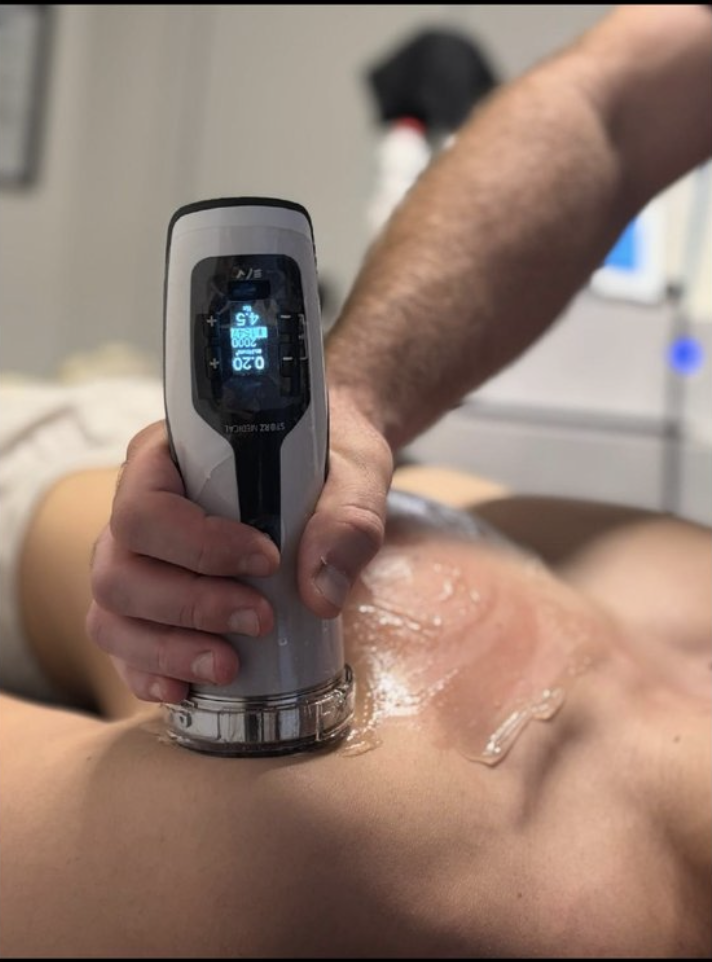
Shockwave therapy for the rotator cuff uses focused acoustic waves to relieve chronic shoulder tendon pain and to break down the calcium deposits behind calcific tendinitis. At West Hills Chiropractic Pain Center in Huntington, NY, this is one of the best-supported uses of shockwave — and one where our focused Storz Medical device has a real edge over the radial machines other clinics use. No surgery, no injections, no downtime.
The two shoulder problems we treat with shockwave
Rotator cuff tendinopathy is chronic shoulder pain from degeneration of the cuff tendons — aching with overhead reach, trouble sleeping on that side, weakness lifting. Calcific tendinitis is a specific, often intensely painful version where calcium deposits build up inside the tendon and show clearly on imaging. Both are common, and both respond to shockwave — calcific tendinitis especially, because the energy can physically help break the deposit apart so the body can reabsorb it.
How shockwave therapy treats the shoulder — and why focused matters here
For tendon pain, focused pulses trigger the usual repair cascade: blood flow, new vessels, reactivated healing cells. For a calcium deposit, the same focused energy fragments it so your body can clear it.
This is the condition where the focused-vs-radial distinction matters most. The rotator cuff and its calcium deposits sit deep, and radial pressure-wave devices lose energy near the surface. A focused system concentrates energy at depth — and a randomized trial found focused shockwave outperformed radial for non-calcific rotator-cuff pain. Several local clinics market radial “EPAT” as shockwave; for a deep shoulder problem, focused is the more capable tool, and that’s what we run.
What the research shows
- An Annals of Internal Medicine systematic review concluded high-energy ESWT improves pain and function in chronic calcific rotator-cuff tendinitis (Bannuru et al., Ann Intern Med, 2014). This is among the strongest evidence for any shockwave indication.
- A randomized trial found focused shockwave beat radial for non-calcific rotator-cuff tendon pain (focused vs. radial RCT, 2021).
Are you a candidate?
A good fit for chronic rotator-cuff pain that hasn’t resolved with rest, anti-inflammatories, or physical therapy — and an especially strong option if imaging shows a calcium deposit. We confirm the diagnosis and rule out a full-thickness tear (which is a different conversation) before treating.
What to expect
- Evaluation and review of any imaging to confirm cuff tendinopathy vs. calcific deposit vs. tear.
- Treatment: five to ten minutes of focused pulses to the precise depth of the tendon or deposit; firm tapping, no numbing.
- No downtime — drive yourself home.
- Three to six sessions about a week apart (calcific cases sometimes need the higher end).
- Rehab alongside to restore strength and motion. Calcium deposits may take weeks to fully reabsorb.
How it compares
| Option | Treats the cause? | Long-term trade-off |
|---|---|---|
| Rest / NSAIDs / PT | Partially | Often incomplete for calcific cases |
| Cortisone injection | No — masks pain | Temporary; repeat injections affect tendon |
| Needle barbotage (for calcium) | Sometimes | Invasive; not always successful |
| Surgery | Sometimes | Invasive; recovery time; last resort |
| Focused shockwave | Yes — heals tendon, breaks down calcium | Strong evidence for calcific cuff; focused beats radial |
FAQ
Frequently asked questions
Does it hurt?
A firm tapping over the shoulder; calcific deposits can be more tender, but it’s tolerable and needs no anesthesia.
How many sessions?
Three to six, about a week apart; calcific tendinitis sometimes needs the higher end.
Will it really break down my calcium deposit?
Focused shockwave can fragment deposits so the body reabsorbs them — it’s one of the best-supported uses, though deposits clear over weeks, not overnight.
Is this the same as the “EPAT” some clinics offer?
EPAT is usually a radial device, which keeps energy near the surface. We use a focused system that reaches the deep cuff — and focused beat radial for cuff pain in a head-to-head trial.
What if I have a rotator cuff tear?
Shockwave treats tendinopathy and calcific deposits, not full tears. We confirm which you have first.
Is it covered by insurance?
Coverage varies; sometimes calcific cases qualify. We explain costs upfront.
Related care at West Hills
- Shockwave therapy overview — how focused ESWT works and every condition we treat with it.
- Physical rehabilitation — the strength-and-motion rehab we pair with shockwave.
- Rotator cuff injury: full condition overview — symptoms, causes, and all options.
- Shoulder pain — other causes of shoulder pain we evaluate and treat.
Reviewed by the clinical team at West Hills Chiropractic Pain Center · Huntington, NY · Last reviewed May 2026
START YOUR RECOVERY
Ready to treat your shoulder without surgery?
Find out whether focused shockwave is right for your rotator-cuff pain or calcium deposit. We’ll review your imaging and confirm the diagnosis first.
400 W Jericho Turnpike, Huntington, NY 11743
Mon 8am–6pm · Tue 7am–6pm · Wed 8am–7pm · Thu 7am–6pm · Fri 8am–6pm · Sat 8am–12pm