

Non-Surgical Spinal Decompression in Huntington, NY
Living with a herniated disc, sciatica, or chronic back pain that won’t go away? VAX-D spinal decompression is an FDA-cleared treatment that relieves pressure on your spine — without surgery, without drugs, and without downtime.
What Is Non-Surgical Spinal Decompression?
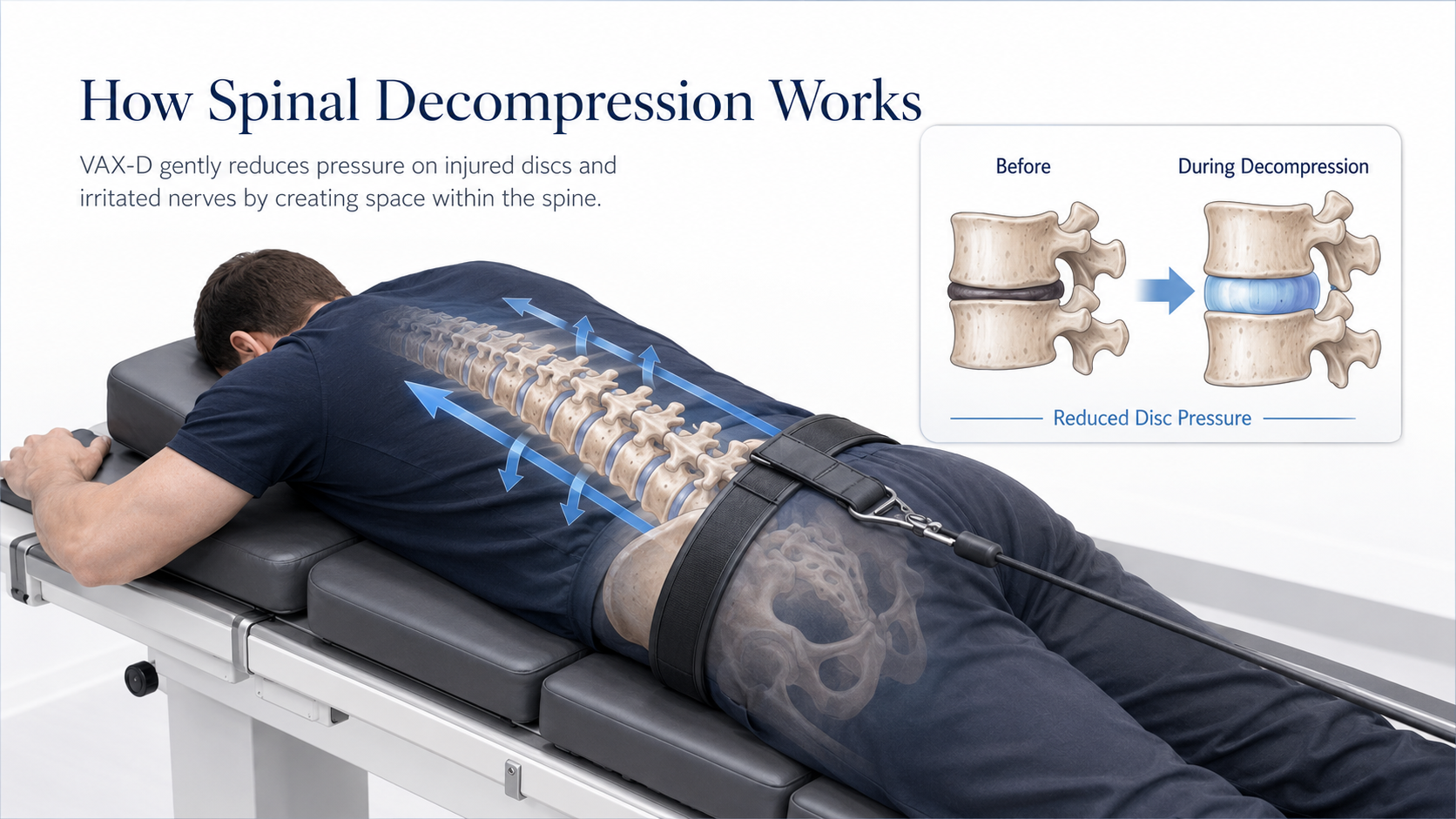
Non-surgical spinal decompression is a motorized therapy that gently stretches the spine using a computerized table. By creating controlled negative pressure within the disc, the treatment encourages herniated or bulging disc material to retract, taking pressure off the nerves that are causing your pain.
Unlike generic traction, which applies constant force and often triggers protective muscle spasms, spinal decompression therapy uses precise, cyclical forces with built-in relaxation periods. This approach allows the spine to decompress gradually and effectively.
The treatment is entirely non-invasive. You remain fully clothed, lie on a specialized table, and sessions typically last about 45 minutes. Most patients report the experience is comfortable — many even fall asleep during treatment.
Conditions Treated with Spinal Decompression
Non-surgical spinal decompression can provide relief for a range of spine-related conditions. If you’re experiencing any of the following, you may be a candidate for treatment.
Herniated Discs
Decompression creates negative pressure that draws herniated disc material back toward the center, reducing nerve compression and pain.
Learn more →Sciatica
By relieving the disc pressure that irritates the sciatic nerve, decompression can reduce radiating leg pain, numbness, and tingling.
Learn more →Degenerative Disc Disease
Decompression promotes nutrient and fluid exchange within deteriorating discs, supporting the body’s natural healing process.
Learn more →Bulging Discs
Gentle decompression helps reduce bulging by restoring proper disc height and spacing between vertebrae.
Learn more →Chronic Lower Back Pain
For patients who have tried other treatments without lasting results, spinal decompression offers a drug-free alternative for pain relief.
Learn more →Spinal Stenosis
Decompression gently opens the spinal canal, potentially relieving the compression that causes stenosis symptoms.
Learn more →Non-Surgical Spinal Decompression vs. Other Treatment Options
Many patients are told surgery is their only option. In most cases, conservative treatment should be explored first.
| Factor | RECOMMENDED VAX-D Spinal Decompression | Injections | Surgical Intervention |
|---|---|---|---|
| Invasiveness | Non-invasive, no incisions | Minimally invasive needle procedure | Surgical incisions, general anesthesia |
| Recovery time | No downtime — return to activities same day | Same day, but relief often temporary | Weeks to months of restricted activity |
| Risk level | Minimal risk, no complications from anesthesia | Infection, bleeding, nerve irritation, steroid side effects | Infection, nerve damage, failed back surgery syndrome |
| Pain during treatment | Comfortable — many patients fall asleep | Needle-based procedure, variable discomfort | Post-surgical pain requiring medication |
| Medication | Drug-free | Corticosteroids or anesthetic injections | Pain medications, potential opioid use |
| Cost | Fraction of surgical costs | Moderate — often requires repeat treatments | $50,000 – $150,000+ |
| Reversibility | Fully reversible — stop anytime | Temporary relief, does not fix underlying issue | Permanent structural changes |
What to Expect During Spinal Decompression Treatment
From your first evaluation to your final session, here’s how the process works.
Consultation & Evaluation
We review your medical history, perform an examination, and may take imaging to determine if you’re a candidate for spinal decompression.
Personalized Treatment Plan
Based on your diagnosis, we create a custom treatment protocol — typically 20 to 28 sessions over 6 to 8 weeks.
Treatment Sessions
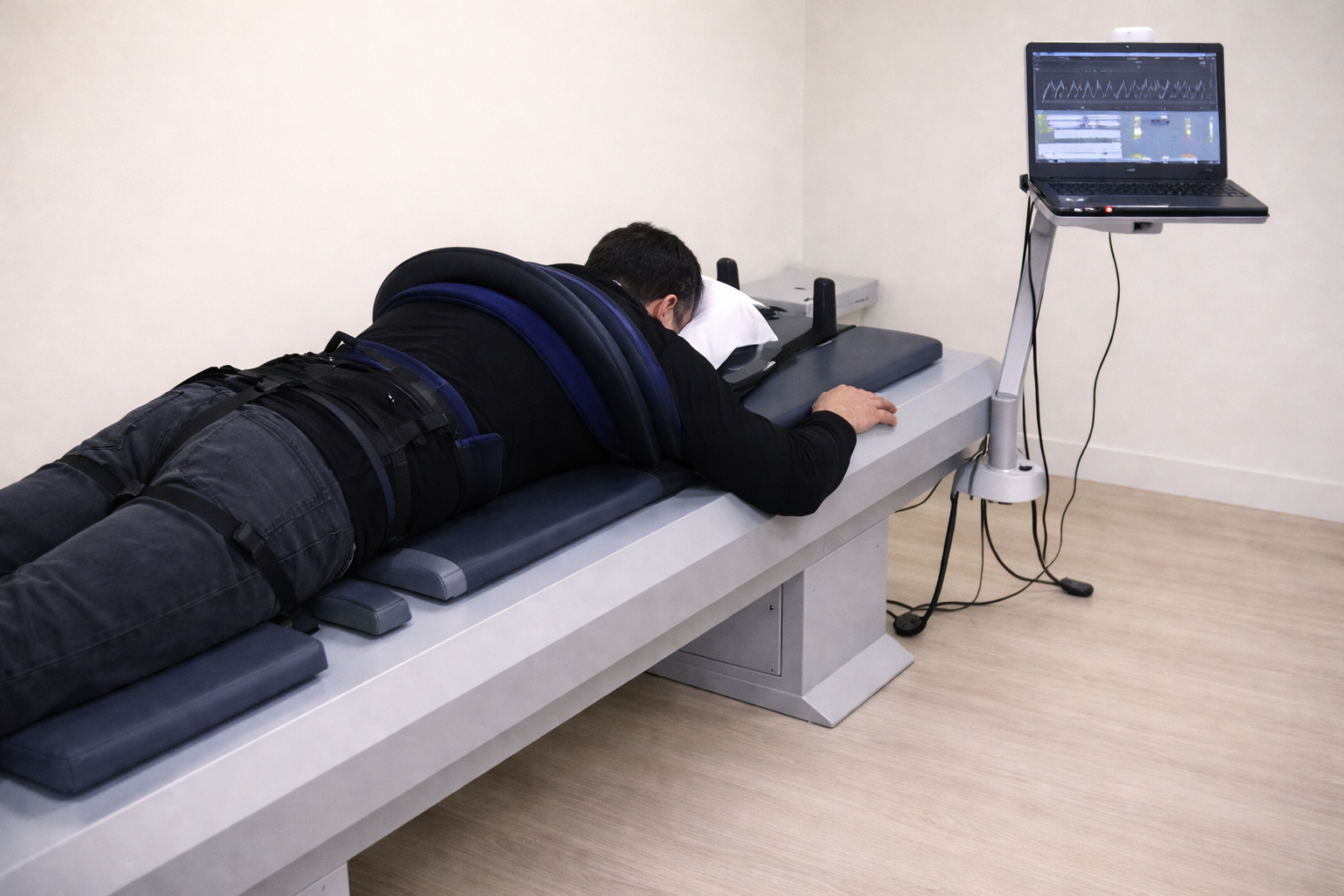
You lie on the VAX-D table wearing a pelvic harness. The computerized system gently decompresses your spine over 45 minutes. It’s painless.
Recovery & Results
Many patients notice improvement within the first few sessions. Full results develop over the course of treatment as discs heal and rehydrate.
Spinal Decompression FAQ
Is spinal decompression painful?
No. Most patients find spinal decompression sessions comfortable and relaxing. The VAX-D system uses computerized controls to apply gentle, precise traction. Many patients actually fall asleep during their sessions. You can stop the treatment at any time by simply releasing the hand grips.
How many sessions will I need?
A typical treatment plan involves 20 to 28 sessions over 6 to 8 weeks. Each session lasts approximately 45 minutes. Your specific treatment plan will be determined after a thorough evaluation of your condition, its severity, and how long you’ve been experiencing symptoms.
Does insurance cover spinal decompression?
Our office accepts major medical insurance, no-fault insurance, workers compensation, and cash payment. Please call our office to discuss coverage and payment options for your specific treatment plan.
What is the difference between spinal decompression and traction?
Traditional traction applies a constant pulling force, which can cause muscles to spasm and resist the stretch. VAX-D spinal decompression uses a computerized system that applies precise, cyclical forces with built-in relaxation periods. This approach creates true negative intradiscal pressure that helps retract herniated disc material and promote nutrient flow to damaged discs.
Can I get decompression if I’ve had back surgery?
In many cases, yes. Patients with failed back surgery syndrome often respond well to spinal decompression. However, patients with certain hardware such as metal rods, screws, or artificial discs may not be eligible. A thorough evaluation including imaging review is required to determine if you’re a candidate.
What is the success rate of spinal decompression?
Clinical studies have reported positive outcomes in approximately 70-90% of patients treated with VAX-D spinal decompression. Results vary depending on the specific condition, its severity, and how long you’ve been experiencing symptoms.
How is VAX-D different from other decompression tables?
VAX-D (Vertebral Axial Decompression) is the original FDA-cleared spinal decompression system, developed by Dr. Allan Dyer. Unlike generic decompression tables, VAX-D uses patented technology with logarithmic decompression curves that achieve true negative intradiscal pressure. It’s the technology we use at West Hills Pain Center.
What Patients With Similar Conditions Experienced
“When I came in with two large lumbar disc herniations, I was scheduled for a surgical procedure called a discectomy. Now I am 98% pain free from the VAX-D treatment and will never have surgery.”
— Verified Patient, Zocdoc“I had 2 herniated discs in my lower spine and was thinking about surgery. After being treated on the VAX-D table, I felt 85% better in 3–4 weeks.”
— Verified Patient, Zocdoc“Very comprehensive with treating my lumbar disc herniation. The results with the VAX-D table are terrific — I am able to sit, stand, and even bend without any issue.”
— Verified Patient, ZocdocReady to Find Relief Without Surgery?
Schedule your spinal decompression evaluation today. We’ll evaluate your condition, review your imaging, and determine if VAX-D is right for you.
Schedule Your Evaluation