


A patient walks in with an MRI report saying "herniated disc at L4-L5." Another with "bulging disc at L5-S1." Both are in pain and confused. The terms are not interchangeable — understanding the anatomical difference explains why they require different treatment approaches.
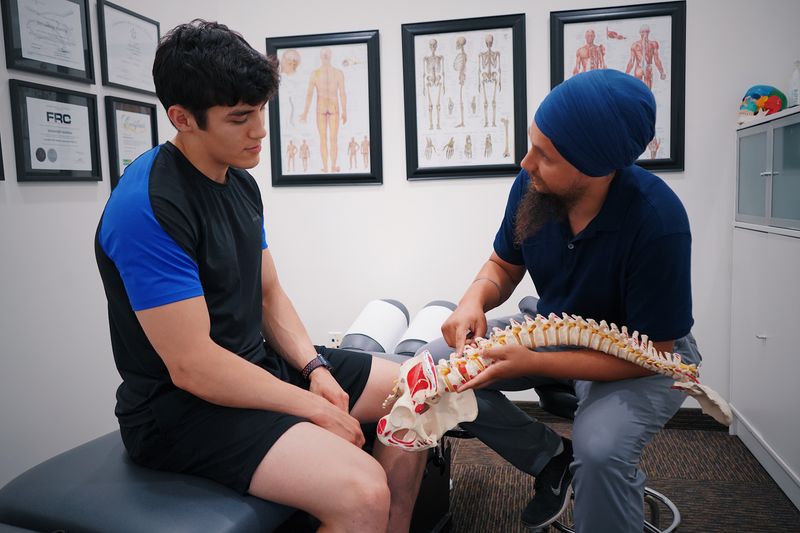
The Anatomy of the Intervertebral Disc
The nucleus pulposus is the gel-like center providing shock absorption. The annulus fibrosus is the tough outer ring of collagen fibers that contains the nucleus. Problems begin when the balance between nucleus pressure and annular integrity is disrupted.
What Is a Bulging Disc?
A bulging disc means the entire disc circumference extends beyond the vertebral body edges — like a slightly overinflated tire. Importantly, the annulus fibrosus is still intact. There's no tear. Many people have bulging discs on imaging with no pain whatsoever.
What Is a Herniated Disc?
A herniated disc means the nucleus pulposus has broken through the annulus fibrosus through a tear. Severity classifications: Protrusion (nucleus bulges through but outer fibers still contain it); Extrusion (nucleus breaks through multiple layers with some continuity); Sequestration (herniated material is a free fragment in the spinal canal — often requires surgery).
Why MRI Findings Don't Always Match Your Symptoms
The size of the disc abnormality doesn't always correlate with nerve compression severity. A small herniation sitting directly on a nerve root can cause more pain than a large herniation directed away from it. This is why we correlate imaging with the clinical exam.
Treatment Differences
Bulging discs frequently respond to conservative care — PT, core strengthening, postural correction, anti-inflammatories. Herniated discs often need more aggressive intervention. VAX-D spinal decompression is particularly effective for herniations: it creates negative intradiscal pressure that can draw herniated material back into the disc space and promote healing of the annular tear.
When Surgery Is Necessary
Cauda equina syndrome is a surgical emergency. Progressive neurological deficit and large sequestered fragments with severe refractory pain also warrant surgery. But the majority of patients with herniated or bulging discs don't fall into these categories.
In our Huntington practice, we evaluate each patient individually. Call us at (631) 659-2980 to discuss what's really going on with your spine and what we can do to help.
Have Questions About Whether Spinal Decompression Is Right for You?
Our team evaluates disc injuries, sciatica, and chronic back pain using a non-surgical, evidence-based approach. Most patients are seen within 48 hours.