

Patient Education
What to Expect During Your First Spinal Decompression Session
I know what it's like when a patient first hears they might benefit from spinal decompression. There's usually some combination of hope and nervousness—hope that we've found something that might actually work, and nervousness because they've never done this before. What if it hurts? What if they feel worse? What if they fall off the table? I've heard it all, and I get it. So let me walk you through what happens from the moment you arrive at our office until you leave, because knowing what to expect makes a real difference in how your body responds to treatment.
The Initial Evaluation: Are You a Candidate?
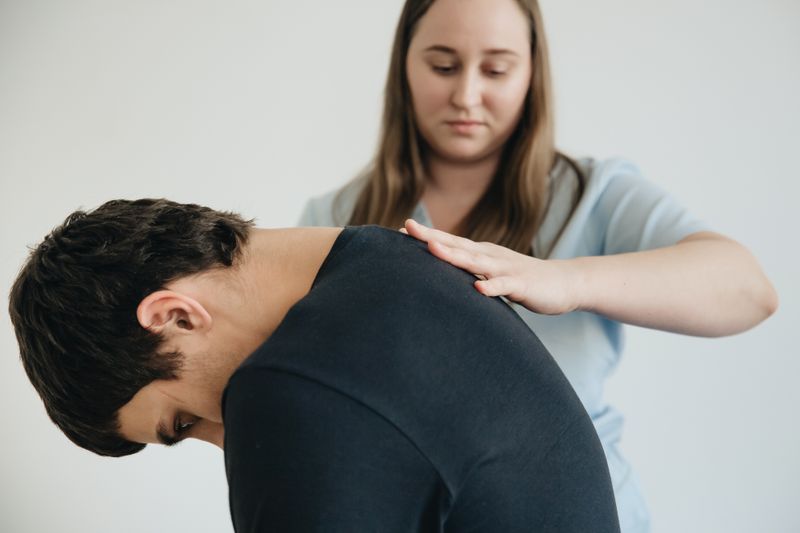
Before you ever lie down on the VAX-D table, we need to know if spinal decompression is right for you. That means we start with a full evaluation. I'll review any imaging you've brought with you—MRIs, X-rays, CT scans. These tell us what's actually going on in your spine. A disc herniation? Foraminal stenosis? Facet joint degeneration? The imaging, combined with what I hear from you about your symptoms, shapes everything we do next.
Then we move into orthopedic and neurological testing. I'm looking for things like nerve root tension signs, strength deficits, and reflex changes. We check your range of motion and reproduce your symptoms to make sure we understand what's driving your pain. This isn't just paperwork—it tells me whether your problem is something decompression can actually address. Not every back pain patient is a good fit for this technology, and I'd rather be honest about that upfront than waste your time and money.
If everything checks out and you're a candidate, we talk about what the treatment protocol looks like, how many sessions we typically recommend, and what you can expect in terms of timeline. This is also when I answer questions. I want you feeling confident, not anxious.
Setting Up on the VAX-D Table
Here's something that surprises most patients: the VAX-D table is nothing like they imagined. They come in thinking they'll be hanging from their arms or that we'll strap them down like they're strapped into a medieval torture device. That's not how it works.
You lie face down on the table—comfortable, relaxed, almost like you're getting a massage. Your arms rest in front of you, supported. The key difference between the VAX-D and some other decompression systems is the pelvic harness. It wraps around your hips and lower pelvis. No chest straps, no awkward pressure on your ribcage. Just a secure, comfortable fit around your hips that gives us the leverage we need to create that pulling force in your lumbar spine.
We adjust the positioning until you're comfortable. If you have any area that's tender or painful even lying down, we work around it. The table has a slight angle to it—it's not perfectly flat—and that actually helps distribute your weight and reduce muscle guarding. Many patients tell me the position itself is already starting to feel better.
What Actually Happens During the Session
Once you're positioned and secured, I'll leave the treatment room. The computer takes over from here. The session typically runs 35 to 45 minutes, and what happens during that time is precisely controlled. The table doesn't just yank on your spine. Instead, the computer applies a very gradually increasing pulling force—decompression force. It's slow, gentle, and progressive. You feel a subtle pulling sensation through your lower back. Most patients describe it as relaxing.
Here's what's actually happening: that gentle pulling is creating negative pressure in your intervertebral discs. If you have a herniated disc, this negative pressure helps draw the disc material back toward the center of the disc, away from the nerve root it's been irritating. If your discs are dehydrated and degenerative, this pumping action creates a gradient that brings nutrients and fluid back into the disc. The physics is elegant, and the results speak for themselves.
The table goes through cycles—periods of decompression alternating with periods of relaxation. It's not pulling the entire time. The cycles allow your muscles to accommodate and prevent them from guarding too tightly. I've had patients fall asleep within a few minutes. That tells you something about how non-threatening the process feels. Your nervous system recognizes it's safe, and you can actually relax.
What You'll Feel: Right Away and After
This is important to address because it's one of the questions I get asked most: Will I feel better immediately after the first session?
The honest answer is: sometimes yes, sometimes no, and both are normal.
Some patients walk out of their first session and notice immediate relief. The pulling sensation continues to feel good even after the table stops. They have less pain with movement. They stand a little taller. That's fantastic, and I love seeing it.
Other patients finish their first session and feel… okay. Maybe a little sore, actually. That soreness isn't damage—it's not something to worry about. What you're feeling is the inflammation in and around that disc starting to shift. The muscles that have been braced and tight for months are getting stretched for the first time in a long time. That takes adjustment. That soreness typically settles within a few hours.
Here's what I tell patients: think of spinal decompression like physical therapy for your disc. If you do physical therapy for a knee injury, you don't expect complete healing after session one. You expect gradual improvement over multiple sessions. Spinal decompression works the same way.
Post-Session Care: The First 24 Hours
Right after your session, I recommend icing the area for 15 to 20 minutes. Not heat—ice. We're managing inflammation and reducing the metabolic demand in that area while the body's natural healing response is activated. You'll go home with a generic icepack or instructions on how to make one if you need it.
For the rest of that day, avoid heavy lifting. I'm talking about anything that requires significant lumbar spine loading—heavy groceries, picking up kids, moving furniture, that kind of thing. Your disc just got a stretch and a reset. Let it settle. Walking is fine. Light activity is fine. Just don't stress the area.
Stay hydrated. Seriously. Your discs are made mostly of water. When you're dehydrated, they compress more and rehydrate more slowly. Drink water throughout the day. You'd be surprised how many patients see better results just by paying attention to this one thing.
The Timeline: When Do People Actually Get Better?
Most patients begin noticing changes somewhere around sessions 5 to 8. Not usually after one session, not usually after two. By the fifth or sixth session, they're reporting things like: "I sat at my desk for two hours yesterday without needing to get up." Or: "I bent down to tie my shoes this morning and didn't feel that sharp pain." These are small wins, but they're real, and they're meaningful.
Significant improvement—the kind where patients say, "I feel like myself again"—usually happens somewhere between sessions 12 and 15. Some patients get there faster. Some take a few more sessions. It depends on how degenerative the disc is, how long the problem's been going on, and whether the patient's doing their part with activity modification and home care.
Typical frequency is five sessions per week for the first two to three weeks, then we taper down. So you're looking at 10 sessions in the first two weeks, then dropping to three sessions a week for a couple more weeks, then maybe two sessions a week. We adjust based on how you're responding.
What If You Don't Feel Better Right Away?
I want to normalize this because I see it happen and patients get discouraged. You don't feel significant improvement after your first week or two, and you start wondering if this was a waste of time. That's when I remind them: disc healing is not a fast process. A herniated disc didn't happen overnight, and it won't un-herniate overnight either. But the biology is happening. The negative pressure in your disc is changing the environment for the worse for that herniation and the better for healing.
We also look at what's happening clinically. Are you moving better? Do you have better range of motion in certain directions? Is the pain pattern changing, even if the overall level hasn't dropped? Sometimes the improvement is subtle before it becomes dramatic.
If after 6 to 8 sessions we're not seeing meaningful progress—and I'm talking about real functional improvement, not just subjective feeling—then we reassess. We might adjust the protocol. We might combine decompression with more aggressive chiropractic manipulation or physical therapy. Or, honestly, we might refer you to a surgeon for a consultation because spinal decompression isn't the right next step for your particular problem.
Getting Ready for Your First Appointment
Wear comfortable clothes—something that's easy to change out of. Bring any relevant imaging and medical records. Eat normally before your appointment; there's no special prep required. If you're nervous, that's completely normal. By the time you're lying on that table and you feel that gentle pulling sensation, most of that nervousness evaporates. Your body recognizes this is something safe and therapeutic, and you can relax into it.
We're here to help you understand what's happening and why. Spinal decompression is one of the most effective tools we have for disc-related pain, and I'm confident that if you're a good candidate—which we'll determine during that initial evaluation—you're going to feel a real difference.
Have Questions About Whether Spinal Decompression Is Right for You?
Our team evaluates disc injuries, sciatica, and chronic back pain using a non-surgical, evidence-based approach. Most patients are seen within 48 hours.